TAG (S)
Published: 03/12/2025

5 mn reading time
Interview
Security in the aviation sector is a major strategic issue, facing regulatory, technological, and safety challenges. At the conference “Innovating with network APIs: feedback from industry leaders and final Hackathon pitch,” held on November 20, 2025, during the Orange OpenTech 2025 trade show (1), Jérôme Morandière, Director of Security at Bordeaux Airport, shared his perspectives on these issues, notably by presenting the innovative Pandrone project. Alongside him, Otilia Anton, Director of Orange LiveNet, discussed the solutions currently under development, illustrating the shared desire to advance airport security through collaboration between the aviation and digital sectors. This exchange highlights the importance of adopting concrete solutions to address current and future threats, while emphasizing the key role that telecommunications and digital technology can play in this transformation.
Watch the entire interview on video and read a written summary of the discussion.
Major challenges in airport security

1. A conservative regulatory environment
Jérôme Morandière emphasizes that securing air transport is a complex task due to a strict regulatory framework. The need to reassure regulators so that they accept new methods, tools, and innovations is a major obstacle. The pursuit of perfection and fear of failure often slow down the rapid adoption of innovative solutions, even if they have proven effective in other sectors. He stresses the importance of changing this mindset and strengthening dialogue with regulators to accelerate the implementation of new technologies.
2. The evolving threat and physical security
Traditional threats, such as detecting explosives or bombs in luggage, remain a constant concern. Jérôme regrets that, in some European and American airports, these operations are still largely manual and empirical. To address these challenges, he mentions an open architecture initiative aimed at making systems more interoperable in order to encourage innovation and collaboration with new players, particularly in the field of artificial intelligence and image analysis.
3. Cybersecurity and growing activism
Another critical threat concerns cybersecurity. The growth of anti-aviation activism and the proliferation of cyberattacks require enhanced protection to preserve the reputation of stakeholders and ensure business continuity. Jérôme emphasizes the need to develop robust solutions to address these risks, including the integration of advanced cybersecurity tools.
Innovative solutions and the role of the digital sector
1. . The contribution of the telecommunications sector
Protecting travelers is an essential mission that requires all possible initiatives and innovations to be fully ensured. This is why enhanced collaboration with the telecommunications and digital sector is highly desirable, with the aim of facilitating the accelerated deployment of innovative solutions. Furthermore, in order to optimize the effectiveness of security measures and better respond to current challenges, it is crucial to promote the development of an open architecture that encourages the integration of new players specializing in artificial intelligence, machine learning, and image analysis.
2. The Pandrone project: autonomous surveillance for airports
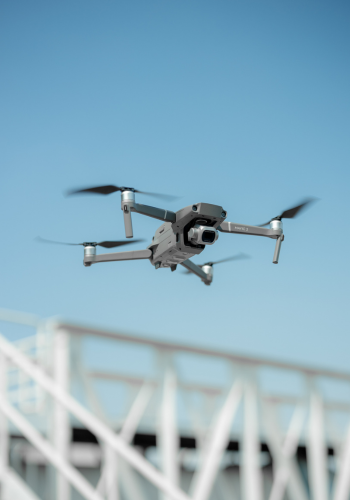
Among the flagship initiatives, Jérôme mentions the Pandrone project, an autonomous perimeter surveillance solution based on robotics. This project involves deploying drones equipped with cameras, capable of patrolling airport perimeters autonomously, while being supervised by human operators.
The system combines advanced hardware and software, including APIs and communication networks, to ensure continuous and effective surveillance. The platform allows real-time data integration, image analysis using artificial intelligence, and rapid alerts in the event of anomalies or potential threats being detected.
The goal is to roll out this technology within the next two years, in order to enhance security while reducing reliance on manual operations. The Pandrone solution meets an urgent need: “In 2018, Gatwick Airport experienced a three-day disruption, with 900 flights canceled and an estimated cost of £64 million to airlines and the airport.” Robotics and automation offer a concrete response to these challenges by enabling continuous and reliable surveillance.
3. Connectivity and cybersecurity for enhanced security
Jérôme also emphasizes the importance of future connectivity in enhancing security, particularly in the fight against fraud and cyber threats. Orange plans to market these solutions by 2026, continuing its partnerships with specialized players such as Optimize and Shabodyi. These collaborations aim to develop integrated offerings capable of extending security to other industrial sectors, while ensuring resilience and continuity of operations.
We attach great importance to this type of use case. We believe it is essential for airport security, but also that it can be replicated in other sectors, such as ports or factories. »
Otilia Anton, Orange LiveNet Director
The exchange between Jérôme Morandière and Otilia Anton highlights the need to adopt an innovative and collaborative approach to address airport security challenges.
Between regulations, physical and cyber threats, and the urgent need to integrate advanced technological solutions, the aviation sector must leverage synergies with digital technology. Concrete projects such as Pandrone illustrate this dynamic, offering immediate solutions to enhance security and ensure business continuity.
By combining innovation, partnership, and strategic vision, the airport of tomorrow will be able to guarantee more effective, resilient security that is adapted to the challenges of the future.
(1) Learn more about Orange OpenTech 2025
This conference is taken from the talk entitled “Innovating with network APIs: feedback from industry leaders and final Hackathon pitch (opens in a new window),” which was held on November 20, 2015, during the Orange OpenTech 2025 (opens in a new window) trade show.
The event, which attracted more than 3,500 visitors—customers, industrial and academic partners, opinion leaders from Orange and elsewhere—was an opportunity to discover the open and collaborative innovation promoted by the Orange Group. In the face of rapid technological change, the event illustrated the vision of progress for all, building a responsible trajectory.
With 370 demonstrators from different countries, Orange OpenTech embodied the Group’s diversity, innovation, and commitment to the future of technology.
The event was structured around five major themes:
- Networks for Humans : Networks serving people
- Tech for Trust : Trustworthy technology
- Intuitive Experiences : Revolutionary user experiences
- Home Simple : Simplified connected homes
- Empowering Business
It is in this context of open innovation that Jérôme Morandière, Director of Security at Bordeaux Airport, and Otilia Anton, Director of Orange LiveNet, discuss airport security in the age of digital technology and artificial intelligence.
Discover also in video
 (opens in a new window)
Open Networks:
Unlocking Innovation Through APIs
What happens when networks open up through APIs? New collaborations, tailored services… and an entirely new generation of connected solutions. In this Duo video recorded at Orange #OpenTech, Otilia Anton, Director of Orange LiveNet, speaks with Harpreet Geekee, Co-Founder & CTO of Shabodi, about this transformation and the opportunities it unlocks for enterprises.
Watch the video (opens in a new window)